System Boundaries and Feedbacks


Lecture 04

September 8, 2025

Review of Last Class

Systems Analysis

What We Study

  • System dynamics;
  • Response to inputs;
  • Alternatives for management or design.

Needs

  • Definition of the system
  • System model

What Do We Need To Define A System?

  • Components: relevant processes, agents, etc
  • Interconnections: relationships between system components
  • Control volume: unit of the system we are trying to model and/or manage
  • Inputs: control policies and/or external forcings
  • Outputs: measured quantities of interest

Mathematical Models of Systems

Conceptual Model of a System

Environmental Systems
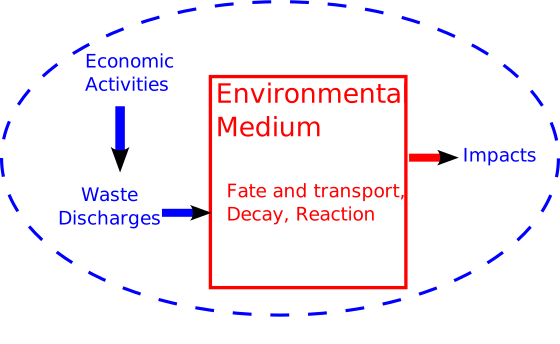
Conceptual Model of an Environmental System
  • Municipal sewage into lakes, rivers, etc.
  • Power plant emissions into air
  • Solid waste placed on landfill
  • CO2 into atmosphere

Other Aspects of Models

  • Deterministic vs. Stochastic
  • Descriptive vs. Prescriptive
  • Mechanistic vs. Statistical

“All Models Are Wrong, But Some Are Useful”

…all models are approximations. Essentially, all models are wrong, but some are useful. However, the approximate nature of the model must always be borne in mind….

— Box & Draper, Empirical Model Building and Response Surfaces, 1987

Questions?

Poll Everywhere QR Code

Text: VSRIKRISH to 22333

URL: https://pollev.com/vsrikrish

See Results

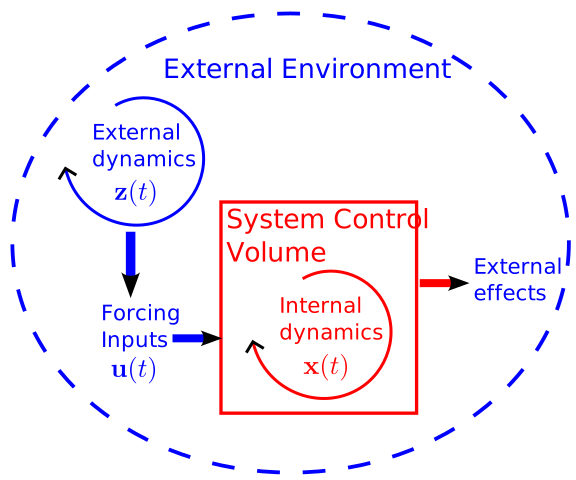
System Boundaries

Defining the System Scope

  • “Internal” system dynamics vs. “external” conditions is somewhat arbitrary.
  • Internal dynamics go into a model.
  • External conditions are “forcings,” initial conditions, or assumptions.

Conceptual Model of an Environmental System

Example: Lake Eutrophication

Simple model of lake eutrophication:

Assume steady-state behavior, first-order linear decay, well-mixed, constant volume.

But in reality:
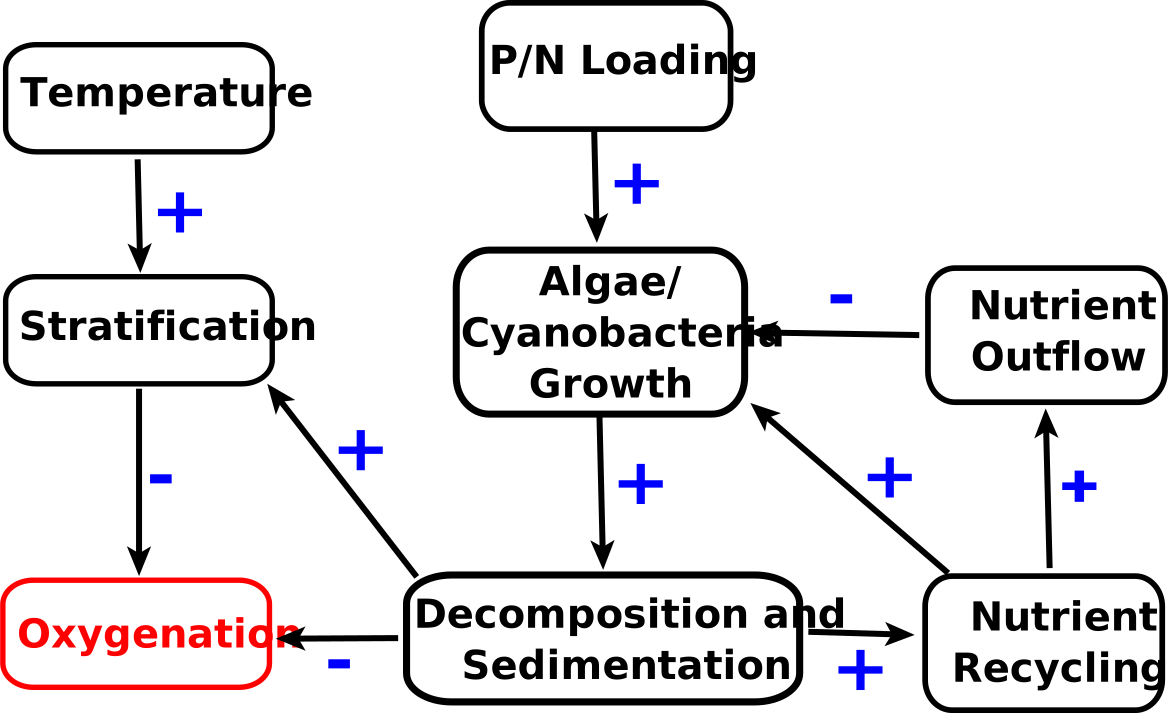
Schematic of processes resulting in lake eutrophication

Systems Diagrams

Schematic of processes resulting in lake eutrophication

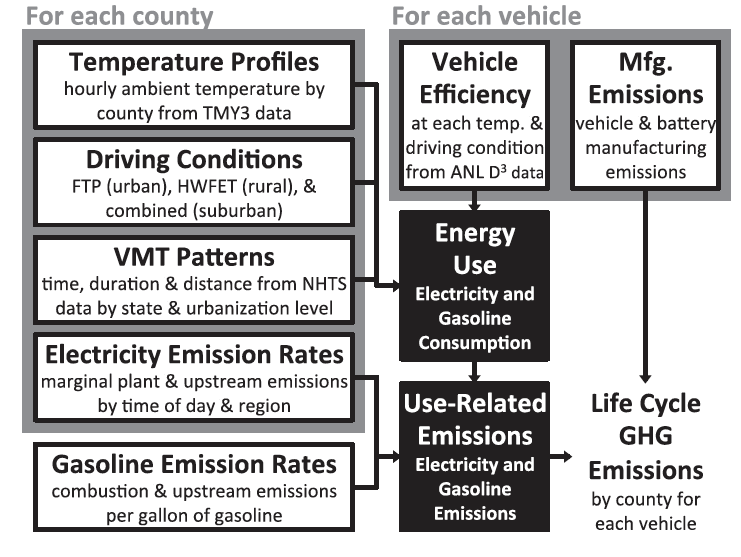
Example: EV Life Cycle Assessment

What factors contribute to the environmental impact of a battery electric vehicle (versus an internal combustion engine)?

Possible System/Life Cycle Framework

Schematic of PHEV LCA Framework

Source: Yuksel et al. (2016)

PHEV vs. Gasoline Outcomes
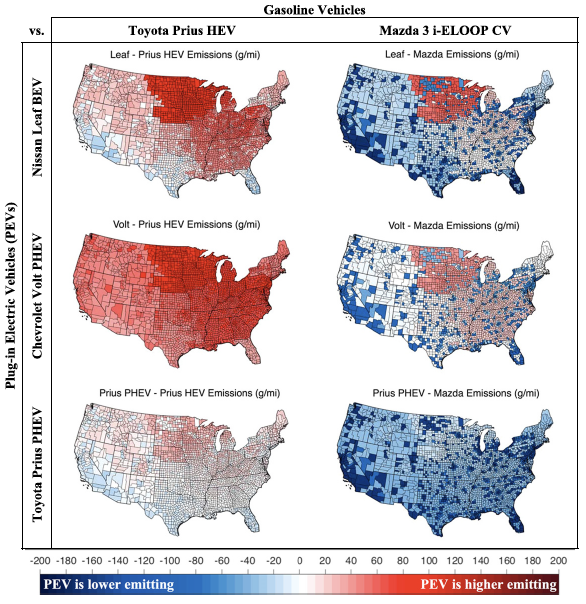
PHEV Comparison

Source: Yuksel et al. (2016)

Constructing Systems Models

Similar principles to models you’ve seen previously:

  • Mass/Energy Balance for stocks;
  • Flows can increase stocks or can decay.

Main difference: potential presence of feedbacks/non-steady state behavior.

Feedbacks

Feedback Types

Feedbacks are “loops” in a system diagram.

Feedbacks can be:

  • Amplifying (sometimes called “positive”)
  • Dampening (sometimes called “negative”)
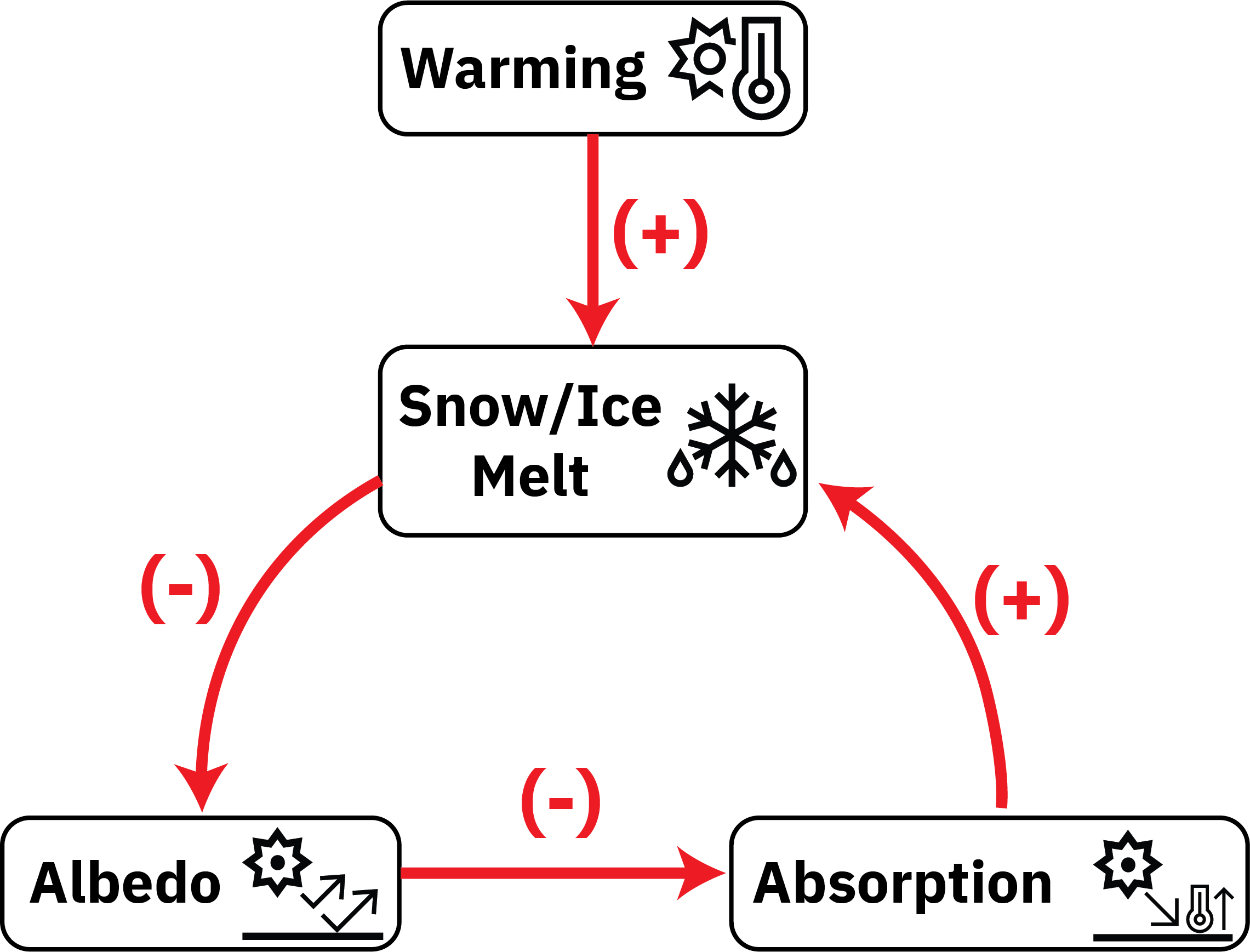
Ice-Albedo Feedback Loop

Amplifying Feedbacks

Shocks will amplify as they are propagated:
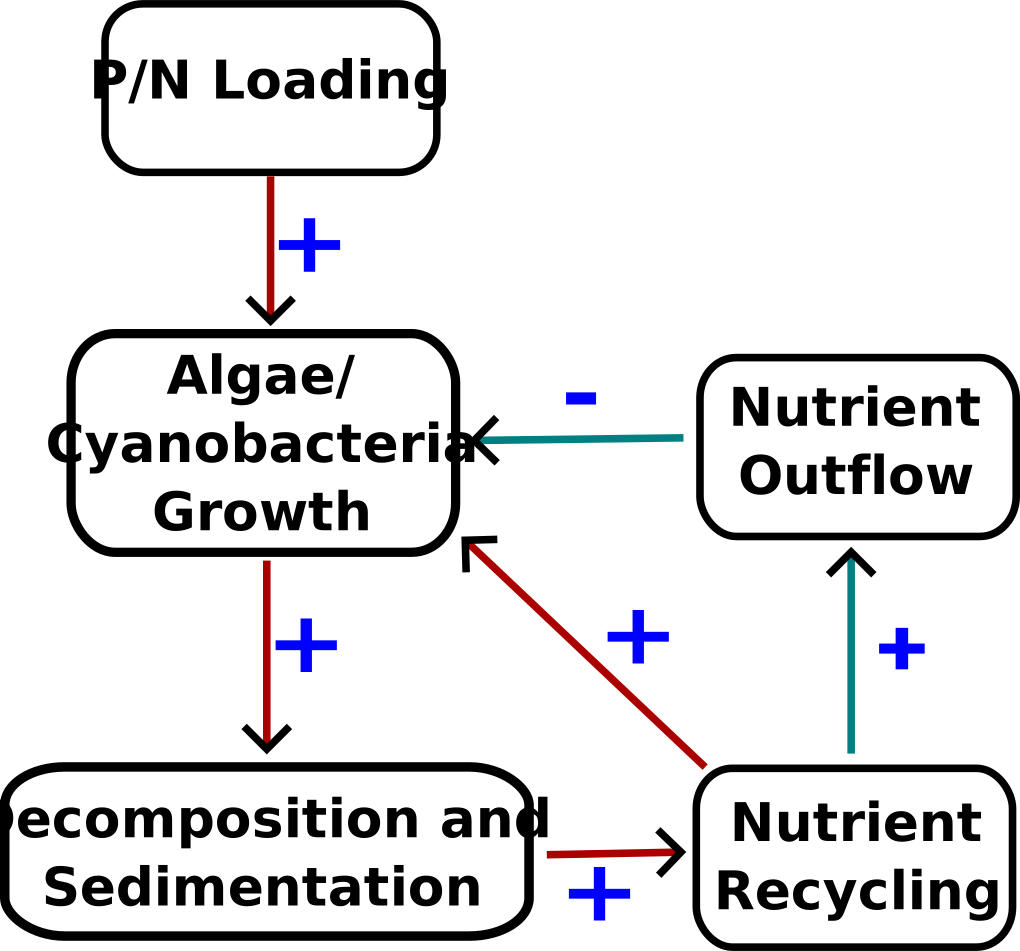
Amplifying Feedback Example

Dampening Feedbacks

Shocks are attenuated (dampened) as they propagate:

Dampening Feedback Example

Other Environmental Feedbacks

Can we think of other examples of environmental feedback loops?

Are they amplifying or dampening?

Simple Example

Consider the following production system:
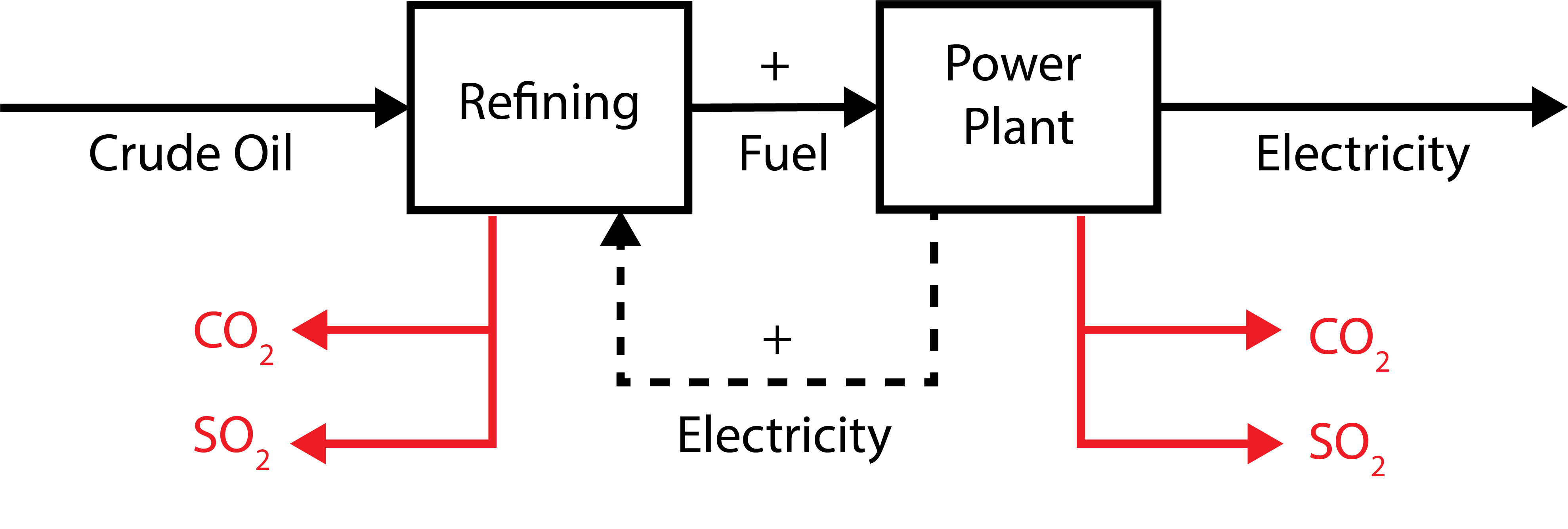
Electricity Production

Simple Example

If we neglect the electricity feedback, what are the lifecycle implications of generating 1000 kWh of electricity?
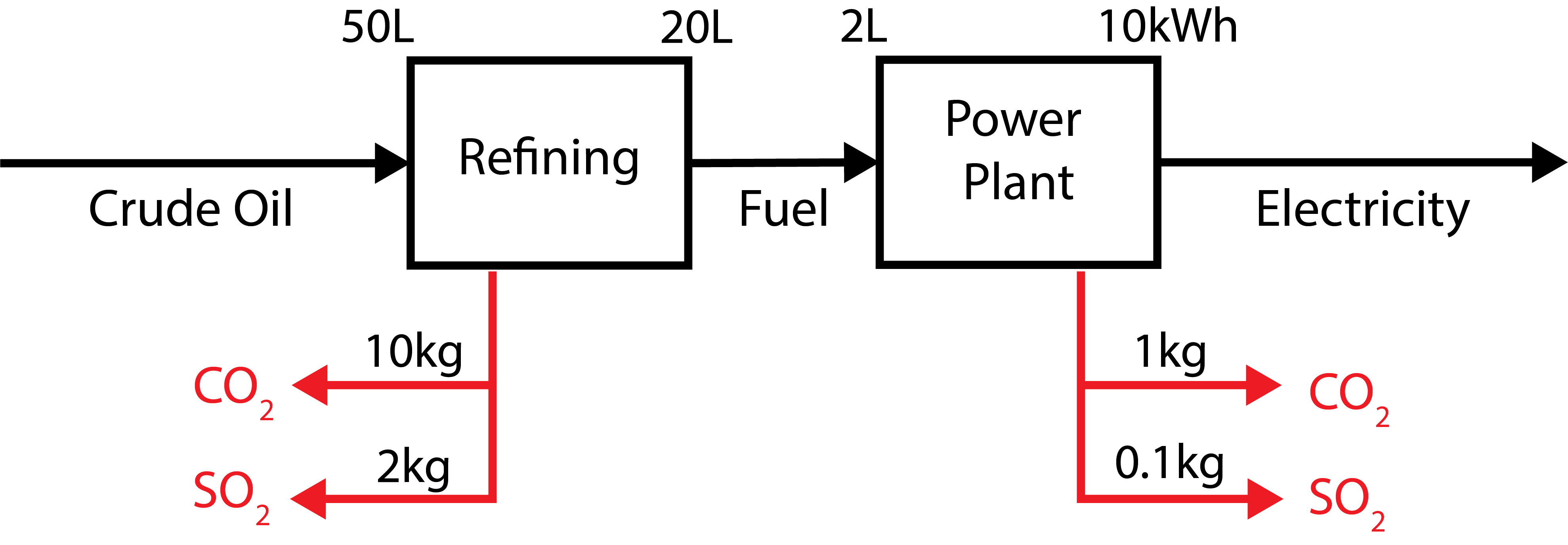
Electricity Production

Simple Example

What about if we include the feedback?
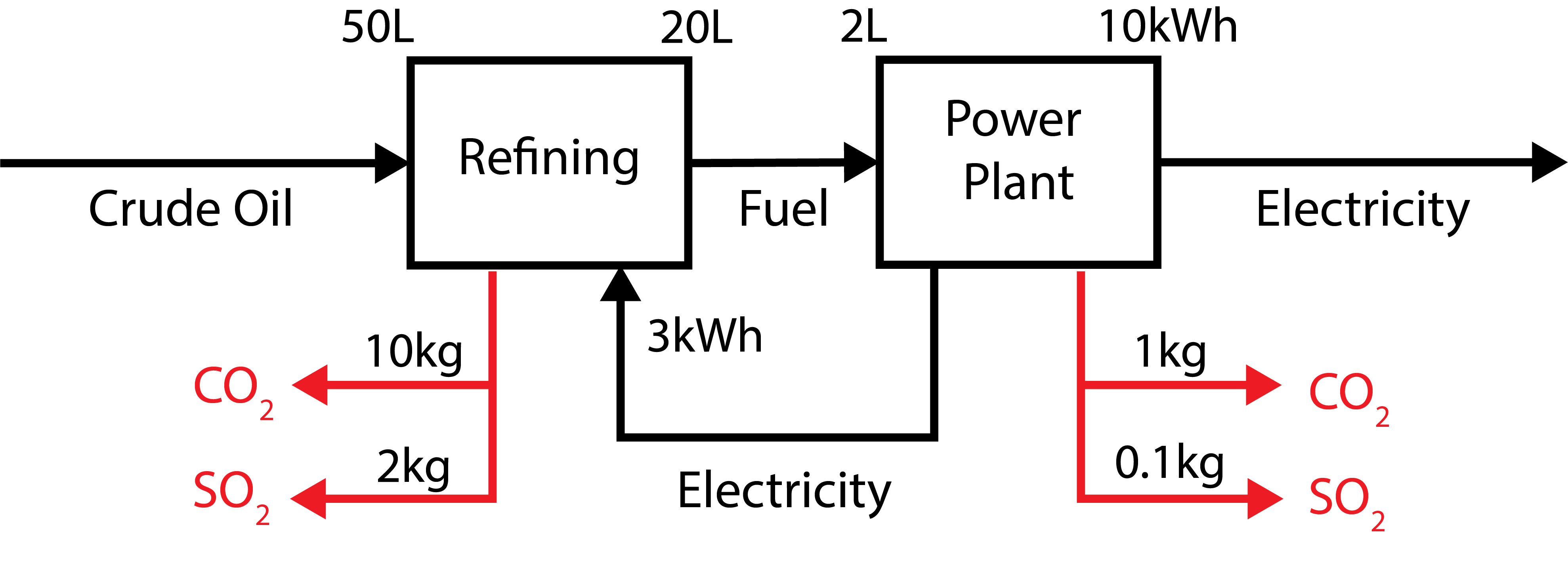
Electricity Production

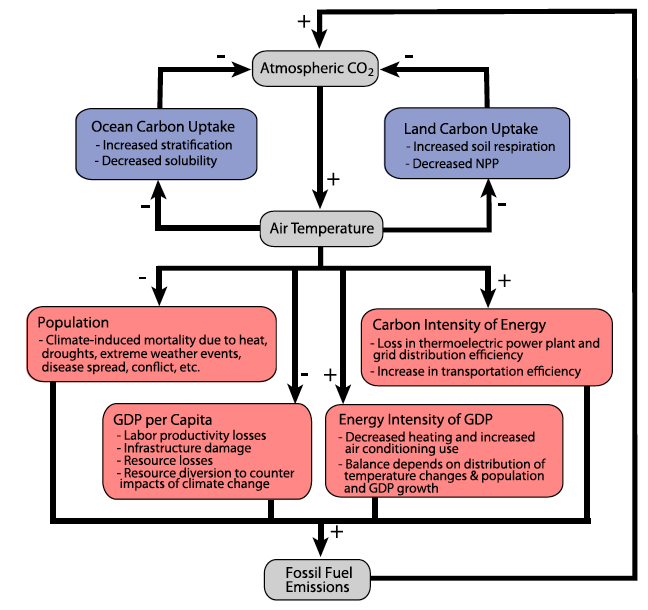
Example: Climate Feedbacks

Climate System Feedbacks

Climate Feedbacks Comparisons

Source: Woodard et al. (2019)

Impact of Including Feedbacks
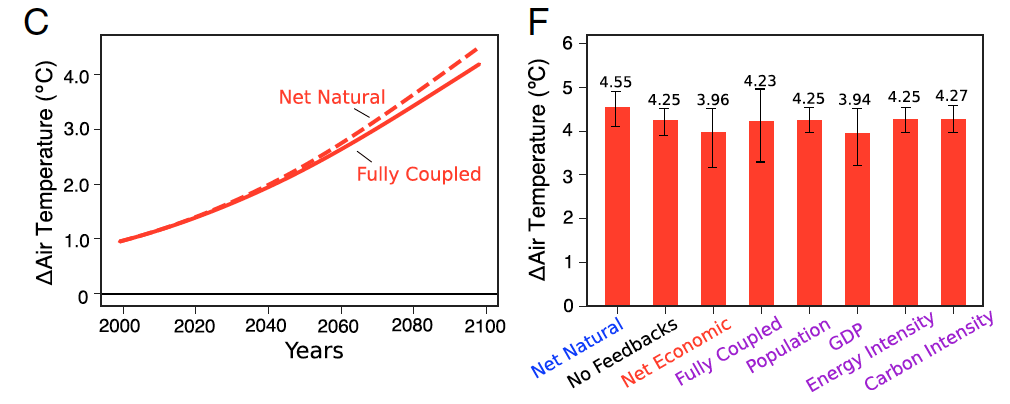
Climate Feedbacks Comparisons

Source: Woodard et al. (2019)

Impact of Including Feedbacks
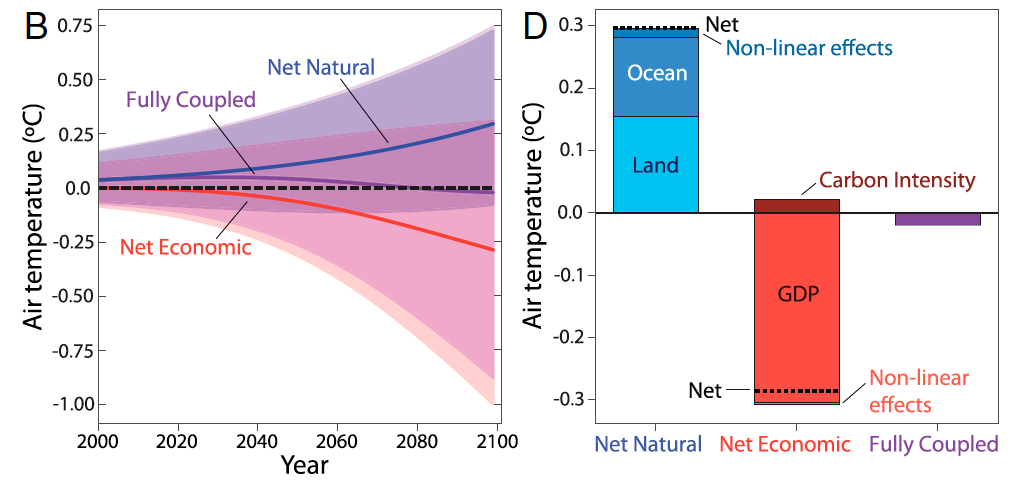
Climate Feedbacks Comparisons

Source: Woodard et al. (2019)

Key Takeaways

Key Takeaways

  • Definition of system boundary strongly influences modeled dynamics and assessments of outcome s (e.g. life-cycle assessment or attribution of effects);
  • Feedbacks can be amplifying or dampening;
  • Amplifying feedbacks can cause instabilities in system dynamics.

Upcoming Schedule

Next Classes

Wednesday: System Dynamics (Equilibria/Bifurcations)

Next Week: Simulation Models

Assessments

Homework 1: Due 9/11 (Thursday) at 9pm.

Reading: Woodard et al. (2019)

References

References

Woodard, D. L., Davis, S. J., & Randerson, J. T. (2019). Economic carbon cycle feedbacks may offset additional warming from natural feedbacks. Proceedings of the National Academy of Sciences, 116, 759–764. https://doi.org/10.1073/pnas.1805187115
Yuksel, T., Tamayao, M.-A. M., Hendrickson, C., Azevedo, I. M. L., & Michalek, J. J. (2016). Effect of regional grid mix, driving patterns and climate on the comparative carbon footprint of gasoline and plug-in electric vehicles in the United States. Environ. Res. Lett., 11, 044007. https://doi.org/10.1088/1748-9326/11/4/044007